Destination guide
Livingstone, Zambia
The town beside the falls: how it works, how to get there, what is worth your time, and how long to give it.
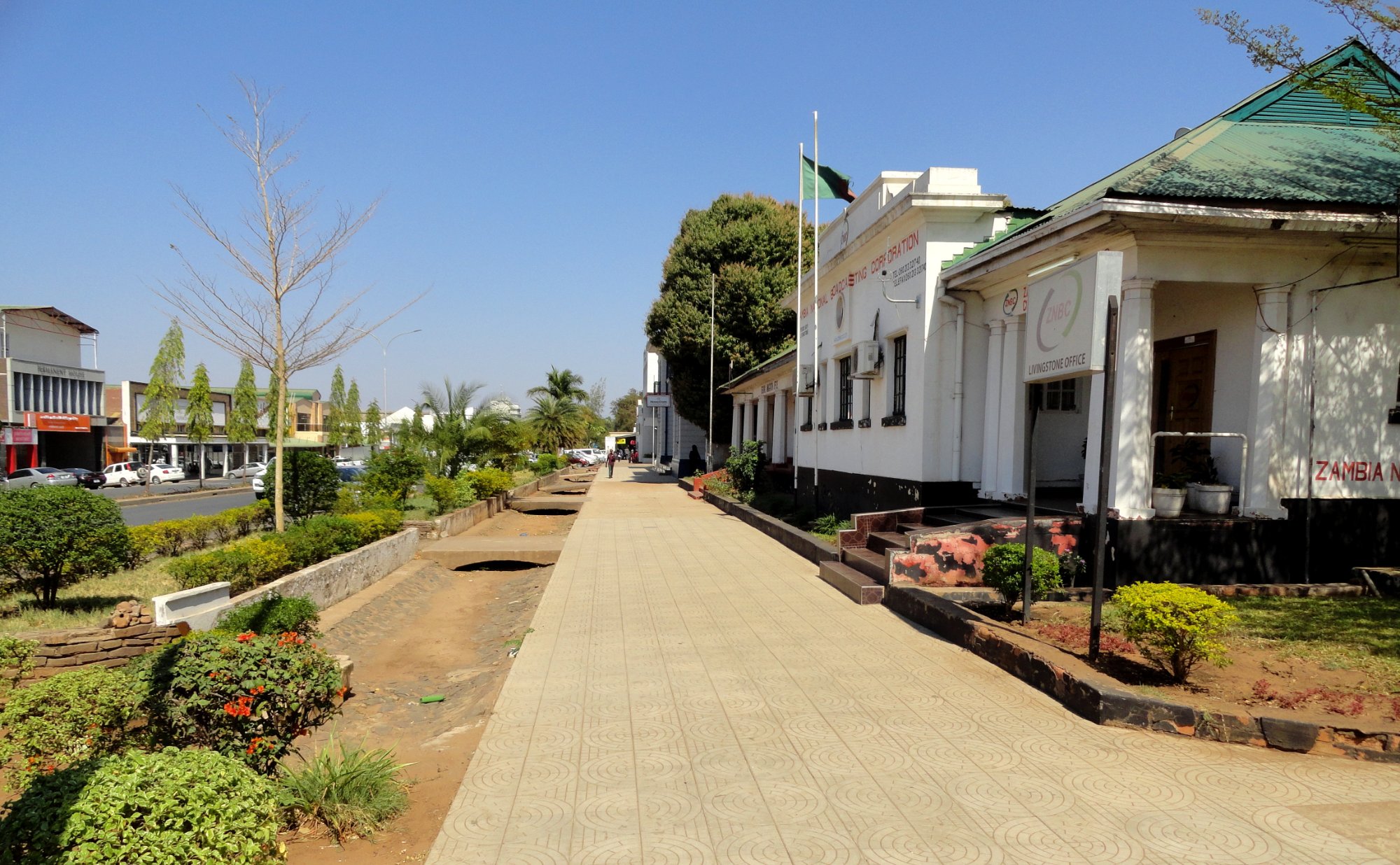
Photo: Fabio Achilli, CC BY 2.0, via Wikimedia Commons
Livingstone is Zambia’s tourism capital and, for most visitors, the country’s front door. It is a small, low-rise, walkable town about eleven kilometres from Victoria Falls, with an international airport five kilometres from its centre and the Zambezi running along its southern edge. It is the easiest place in Zambia to arrive, and the easiest place to spend a first few days.
On this page
Where Livingstone is
Livingstone sits in Zambia’s Southern Province, on the north bank of the Zambezi, directly opposite the Zimbabwean town of Victoria Falls. Its population was about 178,000 at the 2022 census, which makes it a substantial town by Zambian standards but a long way from the scale of Lusaka.
The geography is simple and worth holding in your head. The town centre runs along a single main road. The falls are roughly eleven kilometres south-west of it. Mosi-oa-Tunya National Park runs along the river upstream of the falls, immediately outside the town. Harry Mwaanga Nkumbula International Airport is about five kilometres out, and about fifteen kilometres from the falls themselves. Almost everything a visitor wants is inside that triangle.
Why the town is here
The town was established in 1905 and named after David Livingstone, the Scottish missionary and explorer who reached the falls in 1855 and gave them their English name. Its founding is tied to the completion of the Victoria Falls Bridge in the same year, which turned the crossing into a fixed point on the Cape-to-Cairo rail route.
Livingstone was the capital of Northern Rhodesia until 1935, when the administration moved north to Lusaka. That half-century as a capital is why the centre still has a stock of solid early twentieth-century public buildings and shopfronts that a town of this size would not otherwise possess — and why the museum here is the national one rather than a regional collection.
Getting to Livingstone
By air
Harry Mwaanga Nkumbula International Airport (LVI) handles both domestic and regional flights. Zambia Tourism gives the Lusaka–Livingstone flight time as about one hour ten minutes. For a visitor whose main interest is the falls, flying in and out of LVI and never touching Lusaka is an entirely reasonable trip.
By road from Lusaka
The T1 runs from Lusaka to Livingstone and is tarred for its whole length. The distance is generally given as between 470 and 485 kilometres depending on the start point in Lusaka. This is the busiest tourist road in Zambia and the one most self-drive itineraries are built around. It is a full day’s drive, and worth treating as one rather than as a half-day with an afternoon of activities at the end.
From Botswana and Namibia
The Kazungula Bridge, 923 metres long, opened on 10 May 2021 across the Zambezi at the four-country meeting point west of Livingstone. It replaced a ferry that had been the bottleneck on this route for decades, and it is now the standard crossing from Botswana’s Chobe region into Zambia.
From Zimbabwe
The Victoria Falls Bridge opened on 12 September 1905. Its main arch spans 156.5 metres and the deck sits about 128 metres above the low-water level of the Zambezi. It still carries road, rail and foot traffic between the two countries, and crossing it on foot is one of the more memorable ways to enter or leave Zambia.
Border formalities, visa categories and their costs change, and regional visa arrangements in this corner of Africa have been introduced, suspended and reinstated more than once. We deliberately do not quote current visa rules or prices. Confirm them with the relevant immigration authority close to your travel date.
The town itself
Livingstone is a working Zambian town rather than a resort.
Livingstone is not a resort. It is a working Zambian town that happens to have a world heritage site on its doorstep, and the two coexist without much overlap. The main road carries the banks, the supermarkets, the craft shops and the tour operators. Step one street back and it becomes residential.
What that means practically is that you can do your own errands here easily — there are ATMs, pharmacies, supermarkets and mobile-network shops — and that you should expect a normal town rather than a tourist strip. Mukuni Park, near the centre, holds the main craft market. The Maramba area to the east is where a good deal of the town’s everyday life happens.
The town is small enough to walk in daylight. Taxis are plentiful. Most lodges either run a shuttle to the falls or will arrange one, and that is generally the simplest way to cover the eleven kilometres.
Livingstone Museum
The Livingstone Museum is Zambia’s oldest and largest museum. Its collections date from 1930, it opened to the public in 1934, and it moved into its present building in 1951. It is organised into five galleries covering archaeology, history, ethnography, natural history and art, and it holds material relating to David Livingstone himself.
It is the best single hour you can spend in the town, and it gives the falls a context that no amount of standing at a viewpoint will. We do not publish its opening hours or admission here, because the figures in circulation are undated and we would rather you checked on the day than arrived on the strength of something we could not verify.
Mosi-oa-Tunya National Park
Mosi-oa-Tunya National Park occupies the riverbank upstream of the falls and, in a separate section, the falls themselves. Zambia Tourism gives its area as 66 square kilometres. That is small by Zambian standards — Kafue National Park, in the centre of the country, is more than three hundred times larger.
Its distinguishing feature is what it does not contain. There are no large predators in the park, which is why it can hold a protected white rhino population and why guided rhino tracking on foot is possible here in a way it is not in most Zambian parks. You will also reliably see zebra, giraffe, impala and buffalo, and often elephant along the river.
Judge it for what it is: an excellent, low-effort first encounter with Zambian wildlife, half an hour from your hotel. It is not a substitute for a Luangwa or Kafue safari, and a guide who suggests otherwise is selling rather than advising.
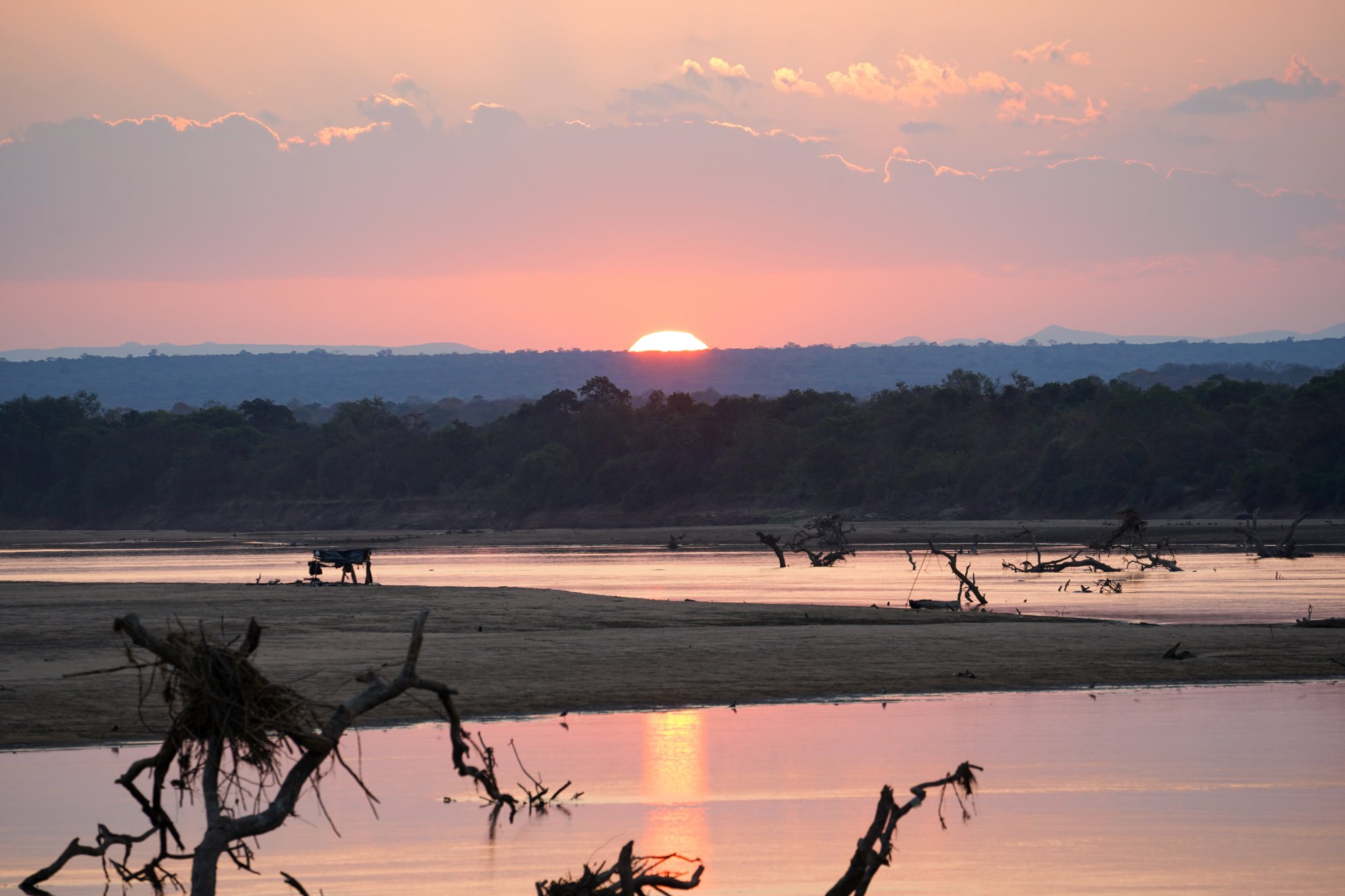
Photo: Timothy A. Gonsalves, CC BY-SA 4.0, via Wikimedia Commons
Getting to the falls
The falls entrance is about eleven kilometres from the town centre on a tarred road. Options are a lodge shuttle, a taxi, a hired car, or a bicycle if you are confident in traffic and heat. There is no need to book a tour simply to see the waterfall; the viewpoint trail is a self-guided walk.
Allow at least two hours on the Zambian side, and more in high water, when you will be soaked and will want to dry off between viewpoints. A waterproof for your camera is more useful than one for yourself.
Victoria Falls from the Zambian side — full guide
The Zambezi: rafting, cruises and Devil’s Pool
Below the falls the Zambezi drops into a zigzag of basalt gorges and becomes one of the most serious commercially rafted rivers in the world. Above the falls it is wide, slow and lined with lodges, and the sunset cruise is close to a fixed ritual.
Three things are worth understanding before you book anything on the water.
- Rafting is seasonal and the season moves. Operators generally run the full low-water section from around August through to the new year, and a shorter high-water section from the new year into the middle of the year. Around the annual flood peak, which falls in early May in a typical year, the river is normally closed to rafting for roughly a month either side.
- Devil’s Pool is not available year-round. The natural rock pool on the lip of the falls, reached from Livingstone Island, typically operates from about mid-August to late December, and always subject to the water level on the day. It is a Zambian-side experience only; there is no equivalent access from Zimbabwe.
- The good months for the river are the thin months for the waterfall. This is the central scheduling conflict of a Livingstone trip and there is no way around it. High water means a spectacular falls and a restricted river. Low water means an open river and a diminished Eastern Cataract.
When to visit
| Roughly | Weather | The falls | The river |
|---|---|---|---|
| Feb – May | End of the rains, warm and humid | Rising to peak flow around April and May; enormous spray, viewpoints often obscured | High-water rafting section only; usually closed around the peak |
| Jun – Aug | Dry, warm days, cold nights | Falling but still strong — the best balance of volume and visibility | The full low-water run opens through this period |
| Sep – Oct | Dry and increasingly hot | Low and dropping; the Eastern Cataract thins noticeably | Prime rafting; Devil’s Pool normally running |
| Nov – Dec | First rains, hot | Lowest of the year; the Eastern Cataract can reduce to a trickle or dry entirely | Rafting and Devil’s Pool both typically available |
If the waterfall is the reason for your trip, aim for the second half of the high-water period — broadly March to July — and accept a restricted river. If the river is the reason, come between August and December and accept that the Zambian cataract may be a shadow of its photographs.
Practicalities
- Language. English is Zambia’s official language and is used for business and signage. Lozi and Tonga are widely spoken in this part of the country.
- Money. The currency is the Zambian kwacha. Card acceptance is good in lodges and larger businesses in Livingstone and patchier elsewhere; carry some cash for markets and taxis.
- Health. Zambia, including the Zambezi valley, is a malaria area. Take medical advice on prophylaxis and vaccinations well before you travel rather than on arrival.
- Getting around. Taxis and lodge shuttles cover everything a visitor needs. A hire car is useful if you intend to drive on to Chobe, Kazungula or up the T1, and unnecessary if you are staying put.
- Safety on the water. The Zambezi has hippo and crocodile above and below the falls. Swim only where an operator has told you it is safe, and take that advice literally.
How long to stay
Two nights is the minimum that does Livingstone justice.
Two nights is the minimum that does the place justice: one full day for the falls and the museum, one for the river or the park. Three to four nights lets you add a rafting day or a day trip across the border without rushing. Beyond that, Livingstone becomes a base for excursions rather than a destination, and most itineraries are better served by moving on to Kafue, the Lower Zambezi or the Luangwa.
Where to stay
Accommodation splits into three groups: guesthouses and hotels in the town itself, riverside lodges strung along the Zambezi upstream of the falls, and a small number of properties close to the park entrance. Each suits a different trip, and the difference matters more here than the star ratings do.
- Where to stay in Livingstone — the areas compared in detail
- Victoria Falls & Livingstone region
- Victoria Falls, Zambian side
- Adventure activities in Zambia
- Self-drive Zambia — the T1 and the Kazungula route
Places to stay in Livingstone
These are the Livingstone properties we currently list, with what a stay includes, when to come and the trade-offs worth knowing.
Fawlty Towers Accommodation and Activities
Backpackers in Livingstone, in the Victoria Falls & Livingstone region, bookable through our booking partner. Affiliate disclosure: the availability link below goes through Stay22 to an independent booking provider, which is the merchant of record. Zambia Travel Guide may earn a commission on a qualifying booking, at no extra cost to you. We do not set prices, hold availability or take payment, and we do not operate this property.
Read the stay guide
Golden Strides Lodge
Lodge in Livingstone, in the Victoria Falls & Livingstone region, bookable through our booking partner. Affiliate disclosure: the availability link below goes through Stay22 to an independent booking provider, which is the merchant of record. Zambia Travel Guide may earn a commission on a qualifying booking, at no extra cost to you. We do not set prices, hold availability or take payment, and we do not operate this property.
Read the stay guide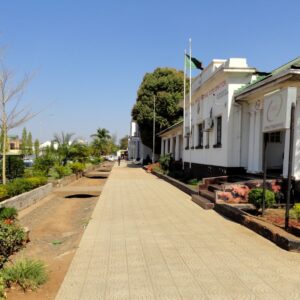
Green Tree Lodge
Lodge in Livingstone, in the Victoria Falls & Livingstone region, bookable through our booking partner. Affiliate disclosure: the availability link below goes through Stay22 to an independent booking provider, which is the merchant of record. Zambia Travel Guide may earn a commission on a qualifying booking, at no extra cost to you. We do not set prices, hold availability or take payment, and we do not operate this property.
Read the stay guide
Livingstone Backpackers
Backpackers in Livingstone, in the Victoria Falls & Livingstone region, bookable through our booking partner. Affiliate disclosure: the availability link below goes through Stay22 to an independent booking provider, which is the merchant of record. Zambia Travel Guide may earn a commission on a qualifying booking, at no extra cost to you. We do not set prices, hold availability or take payment, and we do not operate this property.
Read the stay guide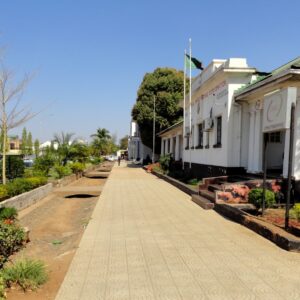
Mosi-O-Tunya Executive Lodge
Lodge in Livingstone, in the Victoria Falls & Livingstone region, bookable through our booking partner. Affiliate disclosure: the availability link below goes through Stay22 to an independent booking provider, which is the merchant of record. Zambia Travel Guide may earn a commission on a qualifying booking, at no extra cost to you. We do not set prices, hold availability or take payment, and we do not operate this property.
Read the stay guide
New Fairmount Hotel and Casino
Hotel in Livingstone, in the Victoria Falls & Livingstone region, bookable through our booking partner. Affiliate disclosure: the availability link below goes through Stay22 to an independent booking provider, which is the merchant of record. Zambia Travel Guide may earn a commission on a qualifying booking, at no extra cost to you. We do not set prices, hold availability or take payment, and we do not operate this property.
Read the stay guideSee every place to stay in Livingstone
Sources
Facts and figures on this page are drawn from the following. Where sources disagree we say so in the text.