Self-drive
Self-Drive Zambia
Where the tar goes, where it does not, and which routes need a second vehicle and a recovery plan.
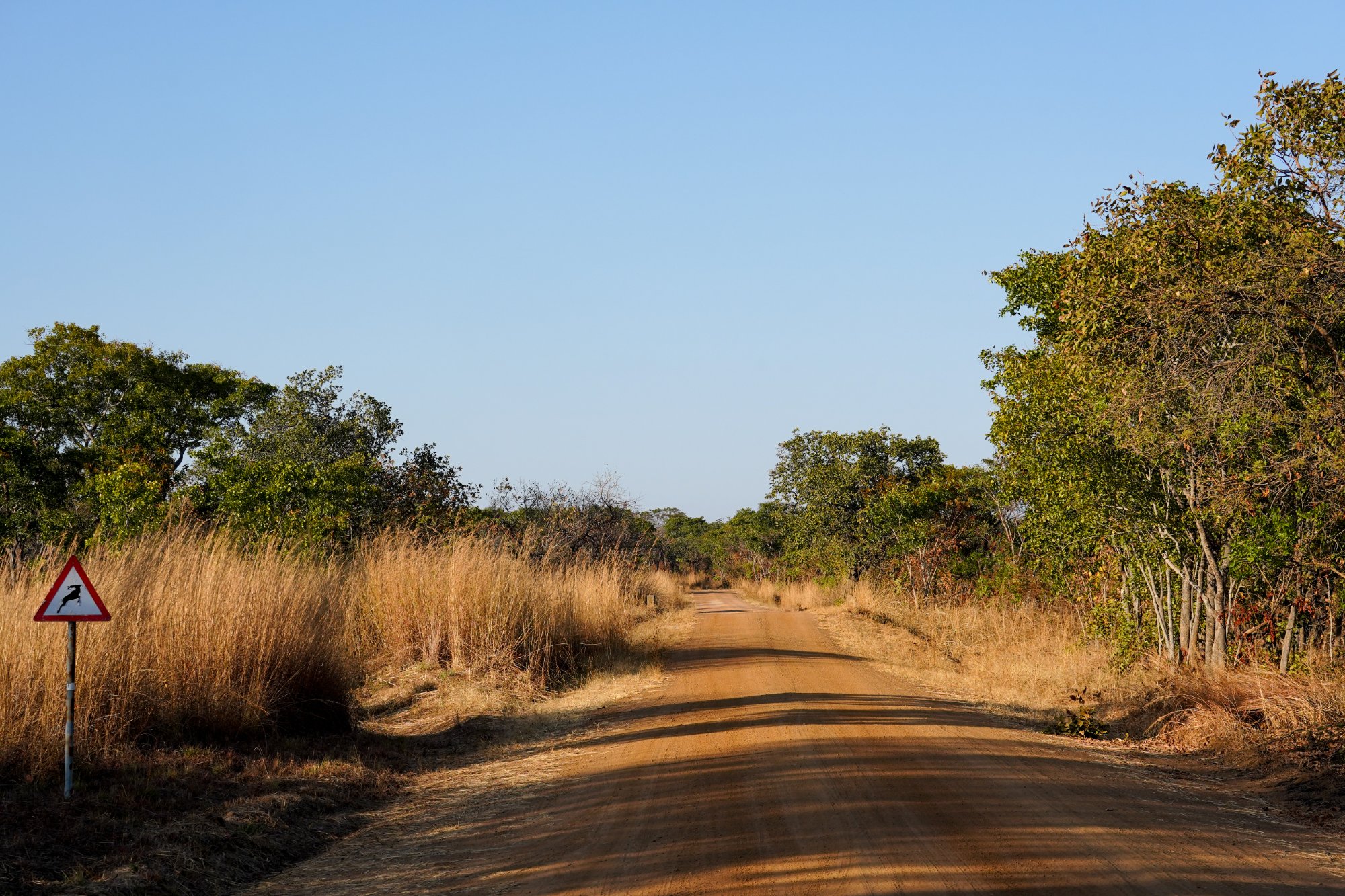
Photo: Timothy A. Gonsalves, CC BY-SA 4.0, via Wikimedia Commons
Self-drive Zambia is realistic, provided you are honest about which half of the country you are driving in. Zambia is one of the better African countries to drive yourself, provided you are honest about which half of the country you are driving in. The trunk network is tarred, signed and manageable in an ordinary car. Step off it and the requirements change completely, sometimes within a kilometre.
The trunk network
| Route | Runs | Surface | Notes |
|---|---|---|---|
| T1 | Lusaka to Livingstone | Tarred throughout | Roughly 470–485 km. The busiest tourist road in the country and a full day’s drive |
| T2 | Lusaka north to Kapiri Mposhi, Serenje, Mpika, Kasama and the Tanzanian border | Tarred | The Great North Road. Very long; two days to the far north is realistic |
| T3 | Kapiri Mposhi to Ndola and the Copperbelt | Tarred | Busy commercial traffic |
| T4 | Lusaka east to Chipata | Tarred | The Great East Road, and the overland route to the Luangwa |
| M9 | Lusaka west through Mumbwa and Kafue National Park to Mongu | Tarred | Bisects Kafue National Park. Beyond Mongu conditions change sharply |
Self-drive Zambia: what vehicle you need
- Two-wheel drive is fine on the T1, T2, T3, T4 and the M9, and for Livingstone, Lusaka, Siavonga, the Copperbelt and Chipata.
- High clearance becomes necessary on the approaches to Lochinvar and Blue Lagoon, the road from Chipata into Mfuwe outside the dry season, and most park entrances.
- Proper four-wheel drive with recovery gear is essential inside Kafue, in the Luangwa parks off the main loop, in the Lower Zambezi, and anywhere west of Mongu.
- Two vehicles is the sensible minimum for Liuwa Plain, Sioma Ngwezi, West Lunga and the deep-sand routes of the west. These are not routes to attempt alone.
Fuel, distance and planning on self-drive Zambia
Fuel is reliable in the towns along the trunk roads and unreliable everywhere else. The practical rule is to fill up in every town whether or not you think you need to, and to carry jerricans for anything beyond the tar. Distances between services in the north and west are long enough that running to a quarter tank is a real risk rather than a theoretical one.
Plan on lower average speeds than the distances suggest. Trucks, livestock, pedestrians, unmarked speed humps at village edges and long stretches without overtaking opportunities all reduce the daily total.
Do not drive at night outside towns. Unlit vehicles, animals on the road, pedestrians and unmarked hazards make night driving substantially more dangerous than daytime driving. Plan every leg to arrive before dark, and treat that as a hard constraint rather than a preference.
Border crossings
Most self-drive Zambia trips cross at least one border.
- Kazungula — the 923-metre bridge to Botswana, opened on 10 May 2021, replacing the old ferry. The standard route to and from Chobe.
- Victoria Falls Bridge — to Zimbabwe at Livingstone, on the 1905 bridge. Also crossable on foot.
- Chirundu — the main Zimbabwe crossing on the Lower Zambezi route.
- Nakonde — to Tanzania at the top of the Great North Road.
Carry the vehicle’s registration documents, a letter of authority from the hire company if it is a rental, and expect third-party insurance, carbon tax and council levies to be handled at the border. Requirements and costs change; confirm them with your hire company before you set out.
Camping
Campsites are much of what makes self-drive Zambia viable at all.
Zambia has a real campsite network, and that is much of what makes self-drive viable here. Many lodges operate a campsite alongside the main property with shared ablutions and access to the bar and restaurant, which lets a driving trip use the same places as a fly-in one at a fraction of the cost. Rooftop tents on hired vehicles are the norm.
Sensible self-drive Zambia routes
- Lusaka – Livingstone – Kazungula, with Lochinvar or Siavonga as a detour. All tar, two-wheel drive viable.
- Lusaka – Kafue – Itezhi-Tezhi, tar to the park then serious tracks inside it.
- Lusaka – Chipata – Mfuwe for the Luangwa, in the dry season, with high clearance.
- The Great North Road to Kasama and Mpulungu, with the waterfall circuit — long, tarred, and the best long overland route in the country.
Where to go next
Sources
Facts and figures on this page are drawn from the following. Where sources disagree we say so in the text.