Where to stay
Where to Stay in Livingstone
Three areas, three different trips. Which one you pick matters more here than the star rating does.
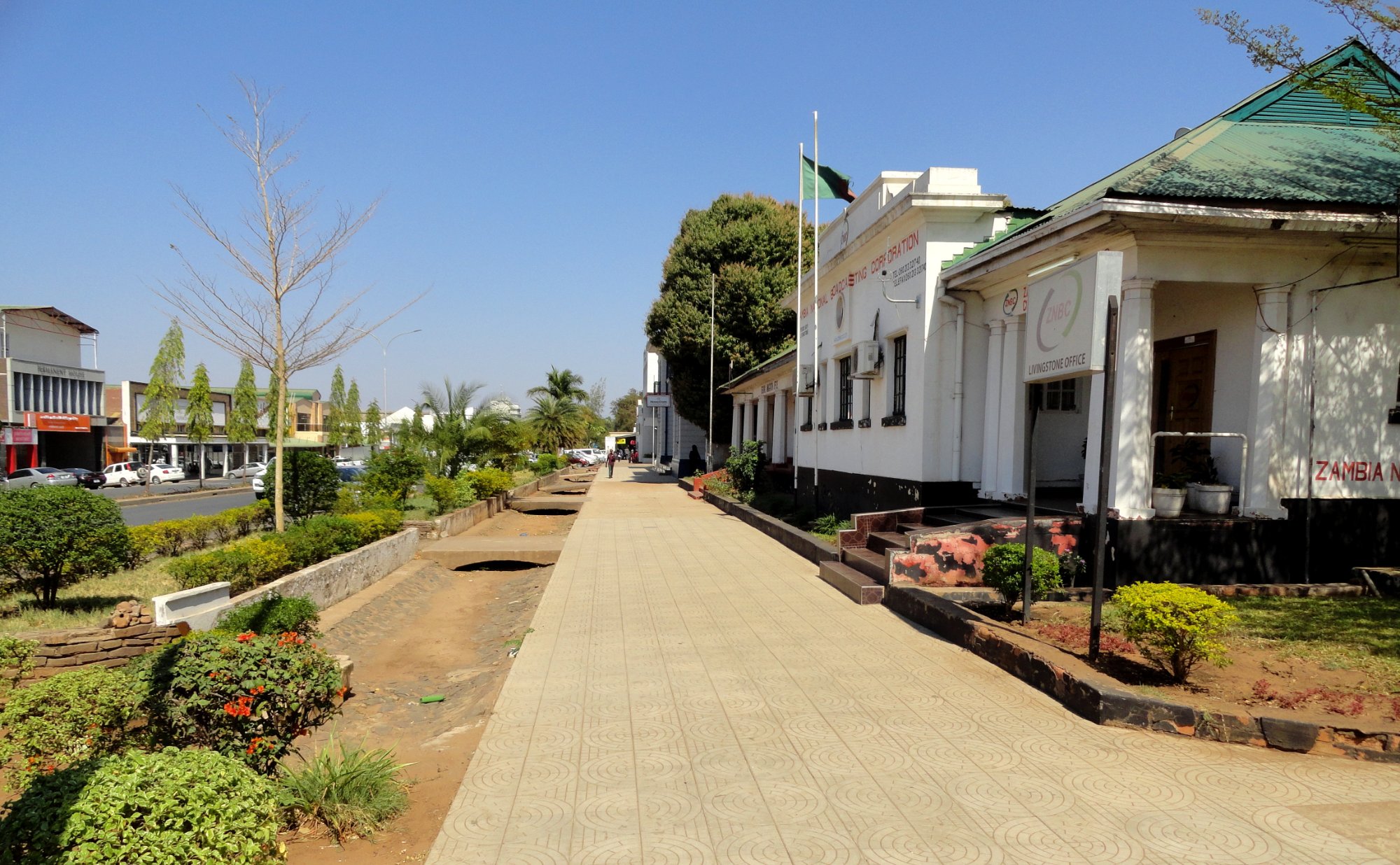
Photo: Fabio Achilli, CC BY 2.0, via Wikimedia Commons
Deciding where to stay in Livingstone is really a choice between three areas spread across about fifteen kilometres: the town centre, the river road upstream of the falls, and the strip close to the national park entrance. They cost you different things, and none of them is simply better.
On this page
The geography, first
Geography drives every decision about where to stay in Livingstone.
Livingstone town sits about eleven kilometres from the Victoria Falls entrance. The airport is roughly five kilometres from the town centre and about fifteen from the falls. Mosi-oa-Tunya National Park runs along the Zambezi upstream of the falls, immediately outside town, and the river road threads through and past it.
Nothing in that triangle is far in absolute terms. But there is no meaningful public transport between the three areas, so wherever you sleep determines whether you are walking, taking taxis, or depending on a lodge shuttle for everything.
The town centre
This is the cheapest of the three options for where to stay in Livingstone.
What it is. Guesthouses, backpacker places and a handful of conventional hotels along and behind the main road.
What it gives you. Independence. You can walk to the museum, the craft market at Mukuni Park, banks, ATMs, pharmacies, supermarkets and a range of restaurants that are not lodge restaurants. It is by some distance the cheapest area, and it is the only one where you can eat somewhere different each night without arranging transport.
What it costs you. You are eleven kilometres from the falls and you will pay a taxi or a shuttle every time you go. There is no river, no view and no bush atmosphere. Town noise is real.
Suits. Independent travellers, self-drivers, anyone on a budget, anyone staying more than three nights, and anyone who wants to see the town as well as the waterfall.
The river road
This is the most expensive answer to where to stay in Livingstone, and for some trips the right one.
What it is. Lodges strung along the Zambezi upstream of the falls, on the road that runs north-west out of town past the national park. This is where most of the higher-end properties are.
What it gives you. The river. Hippo from the deck, sunset over the water, a launch point for cruises and canoe trips, and in many cases wildlife wandering through the grounds. It is the reason people describe Livingstone as beautiful, and you do not get it from the town.
What it costs you. Dependence. You will eat at your lodge most nights because the alternative is a taxi in each direction in the dark. Prices are the highest in the area, and it is a longer run to both the falls and the airport.
Suits. Short stays of two or three nights, honeymoons, anyone whose plan is to see the falls once and otherwise sit by the river, and anyone who has booked an inclusive package.
Near the park entrance
The third answer to where to stay in Livingstone is the smallest cluster of the three.
What it is. A smaller cluster of properties close to the falls entrance and the border crossing.
What it gives you. Proximity to the one thing you came for. In the high-water months, when the falls change hour to hour with the light, being able to walk in twice in a day is a genuine advantage. It is also the most convenient base if you intend to do both the Zambian and the Zimbabwean sides.
What it costs you. Almost no choice of anywhere to eat, and a location that is neither town nor river. Border traffic passes through.
Suits. One or two-night stops, anyone crossing to Zimbabwe, and photographers who want the falls at more than one time of day.
Where to stay in Livingstone: which should you pick?
| If your trip is… | Stay… | Because |
|---|---|---|
| Two nights, falls-focused | Near the park entrance, or the river road | You will not have time to use the town, and the commute eats one of your two days |
| Three or four nights, mixed | Town centre | You get restaurants, the museum and the market without arranging transport, and taxis to the falls are not expensive |
| Self-driving onwards | Town centre | Fuel, supplies, banks and vehicle help are all here, and secure parking is normal |
| Doing both sides of the falls | Near the park entrance | The bridge crossing is walkable from this end |
| Rafting or Devil’s Pool | Anywhere — operators collect | Every operator runs pick-ups from all three areas as standard |
| Here to sit by the Zambezi | River road | It is the only area that offers it at all |
Practical points
A few things apply wherever you choose to stay in Livingstone.
- Shuttles are not always free. River-road lodges usually run transfers to the falls, but whether they are included, chargeable or fixed to set times varies enormously. Ask before booking, not on arrival.
- Airport transfers are short from everywhere. The airport is close to all three areas, so it is a weak reason to choose between them.
- Mosquitoes. Zambia, including the Zambezi valley, is a malaria area. Take medical advice before travelling, and use the nets and repellent that properties provide.
- Wildlife on the river road. Elephant and hippo move through this area. Follow the property’s instructions about walking between buildings after dark; they are not a formality.
- High season fills. The dry months and the Christmas and New Year period are when Livingstone is busiest. Book earlier than you would expect to for a town of this size.
We do not list individual properties on this site yet, and we do not rank them. When we do, the listings will state where the data came from and how we are paid — see the affiliate disclosure. Until then this page is orientation, not a shortlist.
Getting between the three areas
Whichever of the three you choose, you will move between them, and there is no public transport that does it for you. Taxis are the default and are readily available in the town centre; along the river road and near the gate you will usually be depending on your property to call one, which takes longer than you expect after dark.
Lodge shuttles are the other option, and they are the reason the river road works at all. Most riverside properties run at least one scheduled run to the falls each day. Whether it is included in the rate, charged per person, or fixed to times that do not suit you varies enormously between properties, and it is the single most useful thing to establish before booking where to stay in Livingstone.
Walking between areas is not realistic. The town to the falls is eleven kilometres on a road with traffic and no continuous pavement, and the river road has wildlife on it. Cycling is done, but by people who are confident in heat and traffic.
When to book
Timing affects where to stay in Livingstone as much as budget does.
Livingstone fills more completely than its size suggests, because the supply of good rooms is small and the demand is international. The dry months from about June to October are the busiest, and the Christmas and New Year period is busier still. In those windows the riverside lodges go first, then the better town guesthouses.
The low-water months of October to December are quieter at the falls themselves but busy on the river, because that is rafting and Devil’s Pool season. If your trip is built around the river rather than the waterfall, book as early as you would for the peak.
In the main rains, roughly January to April, you will find availability almost anywhere. That is also when the falls are building towards their peak, so it is an underrated time to be choosing where to stay in Livingstone rather than competing for rooms.
Three mistakes worth avoiding
These are the three most common errors in choosing where to stay in Livingstone.
- Booking the river road for a short, activity-heavy trip. You will spend a meaningful part of two short days in a vehicle, and eat every dinner in the same restaurant.
- Booking the town centre and expecting a view. The town is a working town. The Zambezi is not visible from it.
- Assuming the falls entrance is walkable from wherever you are. Only properties close to the gate can make that claim, and not all of those that do are as close as the listing implies.
The Livingstone properties we list
Every property below is one we have written up in full. Nothing here is a review, and none of it is paid placement.
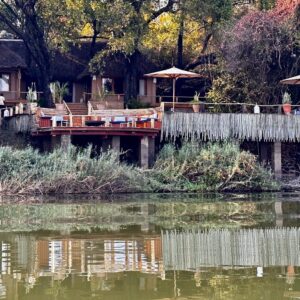
Tongabezi Lodge
Lodge in Livingstone, in the Victoria Falls & Livingstone region, bookable through our booking partner. Affiliate disclosure: the availability link below goes through Stay22 to an independent booking provider, which is the merchant of record. Zambia Travel Guide may earn a commission on a qualifying booking, at no extra cost to you. We do not set prices, hold availability or take payment, and we do not operate this property.
Read the stay guideSee every place to stay in Livingstone
Sources
Facts and figures on this page are drawn from the following. Where sources disagree we say so in the text.