Region
Bangweulu & the Central Wetlands
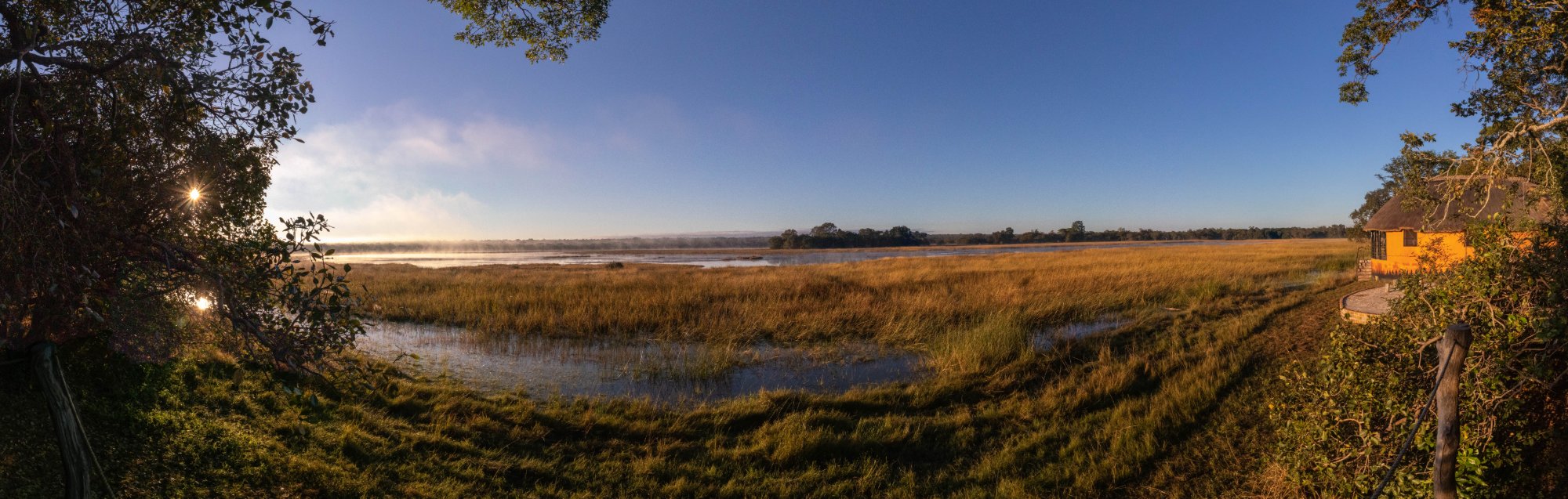
Shoebills and black lechwe on the swamps, and ten million fruit bats over Kasanka each November.
Photo: Sybryn, CC BY-SA 4.0, via Wikimedia Commons
Bangweulu is one of the two protected areas that define this region for visitors. North-east of the Copperbelt, Zambia flattens into a system of lakes, swamps and seasonally flooded grassland. Two protected areas define it for visitors: tiny Kasanka, which hosts what is thought to be the largest mammal migration on earth, and the vast Bangweulu Wetlands, which hold black lechwe and one of Africa’s most sought-after birds.
Kasanka National Park and the bats
Kasanka is about 390 square kilometres — one of the smallest national parks in Zambia — and for most of the year it is a quiet patch of miombo, swamp forest and lake. Then, from around October to December, somewhere in the order of ten million straw-coloured fruit bats arrive and roost in a few hectares of swamp forest.
The colony peaks from November into early December. At dusk the bats leave the roost in a column that takes a long time to pass overhead; at dawn they return. By biomass it is regarded as the largest mammal migration in the world, and it happens in an area you can walk across in twenty minutes.
Kasanka is also one of the more reliable places in Zambia to see sitatunga, the swamp-dwelling antelope, from the park’s raised hides.
The Bangweulu Wetlands
Bangweulu is a roughly 6,000 square kilometre wetland system managed by African Parks together with the Department of National Parks and Wildlife and the surrounding chiefdoms. It is the stronghold of the black lechwe, an antelope largely confined to this basin, which occurs here in very large herds.
It is also one of the most accessible places in Africa to look for the shoebill — the enormous, prehistoric-looking stork that draws birders across continents. Shoebill searching here is done on foot and by canoe with local guides, and it is not guaranteed.
The wetland season runs roughly May to July, when the water has dropped enough for access but the birds are still concentrated.
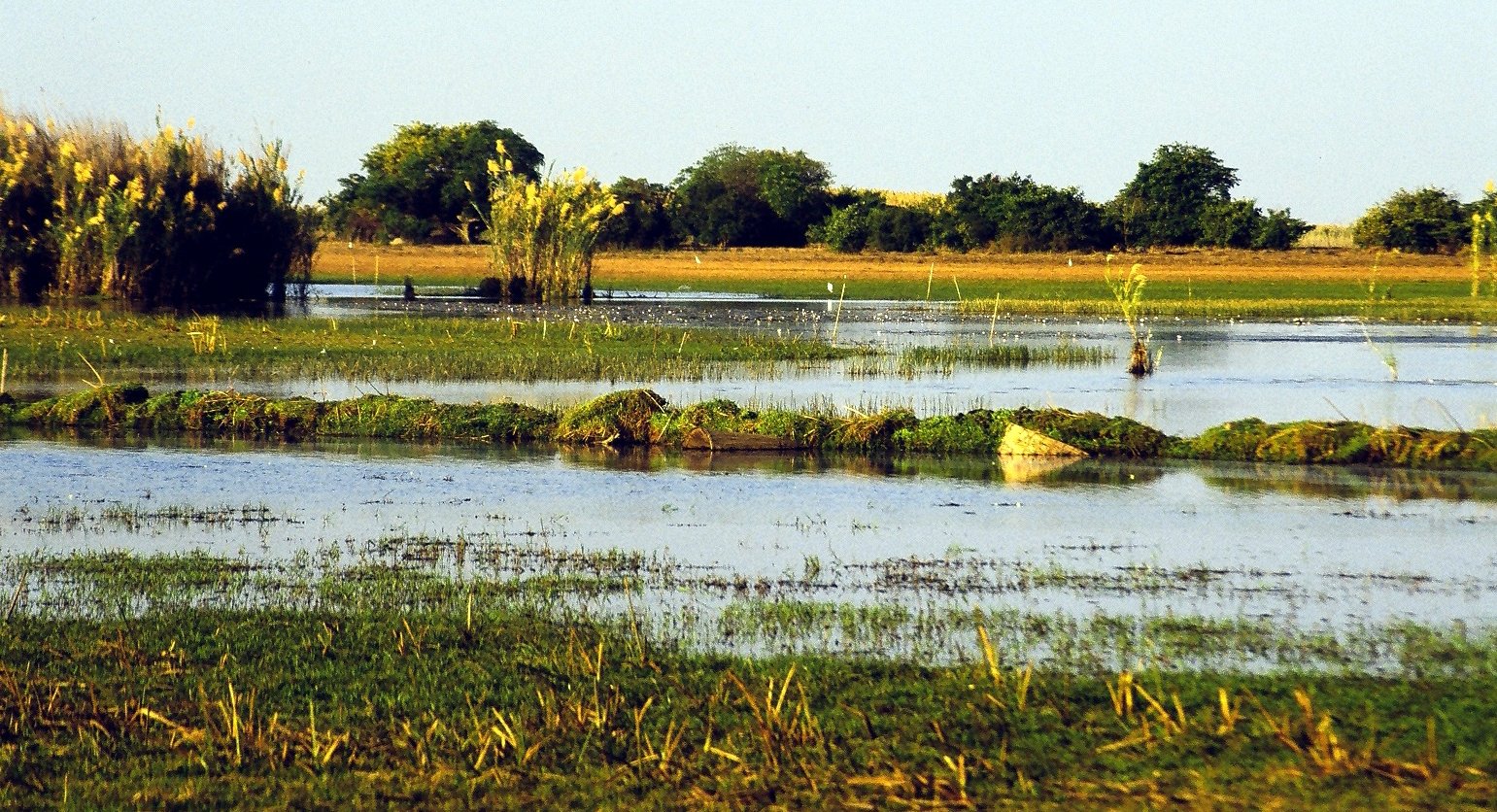
Photo: Mehmet Karatay, CC BY-SA 4.0, via Wikimedia Commons
The two seasons do not overlap. Bangweulu is at its best from around May to July. Kasanka’s bats peak in November and early December. They are about 150 kilometres apart and they are, in practice, two separate trips. Any itinerary that promises both in one visit is promising one of them badly.
Lake Bangweulu and Samfya
The open lake at the heart of Bangweulu is a different place again.
The open lake at the heart of the system has genuine sand beaches on its southern shore near Samfya, which is not something most people expect of central Zambia. It is a domestic holiday destination more than an international one, and it makes a reasonable overnight stop on the long drive north.
When to go
Bangweulu and Kasanka do not share a season.
| Roughly | Where | Why |
|---|---|---|
| May – Jul | Bangweulu Wetlands | Falling water, concentrated black lechwe, the main shoebill window |
| Nov – early Dec | Kasanka | The fruit-bat colony at its peak |
| Aug – Oct | Either | Dry, hot, easiest driving; neither headline event is running |
Getting there
- By road, the Great North Road (T2) runs from Lusaka through Serenje and Mpika. Kasanka lies off it near Mansa’s road junction; Bangweulu is reached on unsurfaced roads from that corridor.
- Expect a long drive. This is central-northern Zambia and the distances from Lusaka are substantial. Most visitors break the journey.
- By air, charter flights serve both areas, and are the usual choice for short bat-season visits.
How long to give Bangweulu and Kasanka
Three nights at Kasanka in the bat season is the right length: the spectacle happens twice a day, at dusk and dawn, and weather can spoil one evening entirely. Bangweulu needs three or four, because shoebill searching is slow work and rarely succeeds on a first attempt. Combining either with the long drive north means adding travel days at both ends.
Who Bangweulu suits
Birders and naturalists above all. The shoebill is one of the most sought-after birds in Africa and this is among the most reliable places to look for it. The Kasanka bat colony, meanwhile, is a spectacle of a kind that has no equivalent anywhere else, and it draws people who would not otherwise describe themselves as wildlife travellers.
What this region is not
It is not a Big Five destination and it does not pretend to be. Predator sightings are uncommon and the parks are small or wet or both. Come for the specific thing that is here.
Where to go next
- Northern Lakes & Waterfalls — further up the same road
- The Luangwa Valley — east of here, across the escarpment
- Copperbelt & North-Western Zambia
- All Zambia destinations
- Zambia itineraries — how this region fits into a route
- Where to stay in Zambia
- Travel planning — seasons, flights and getting around
Sources
Facts and figures on this page are drawn from the following. Where sources disagree we say so in the text.