Planning
Zambia Travel Planning
Seasons, flights, roads, money and health — the practical layer under every Zambian itinerary.
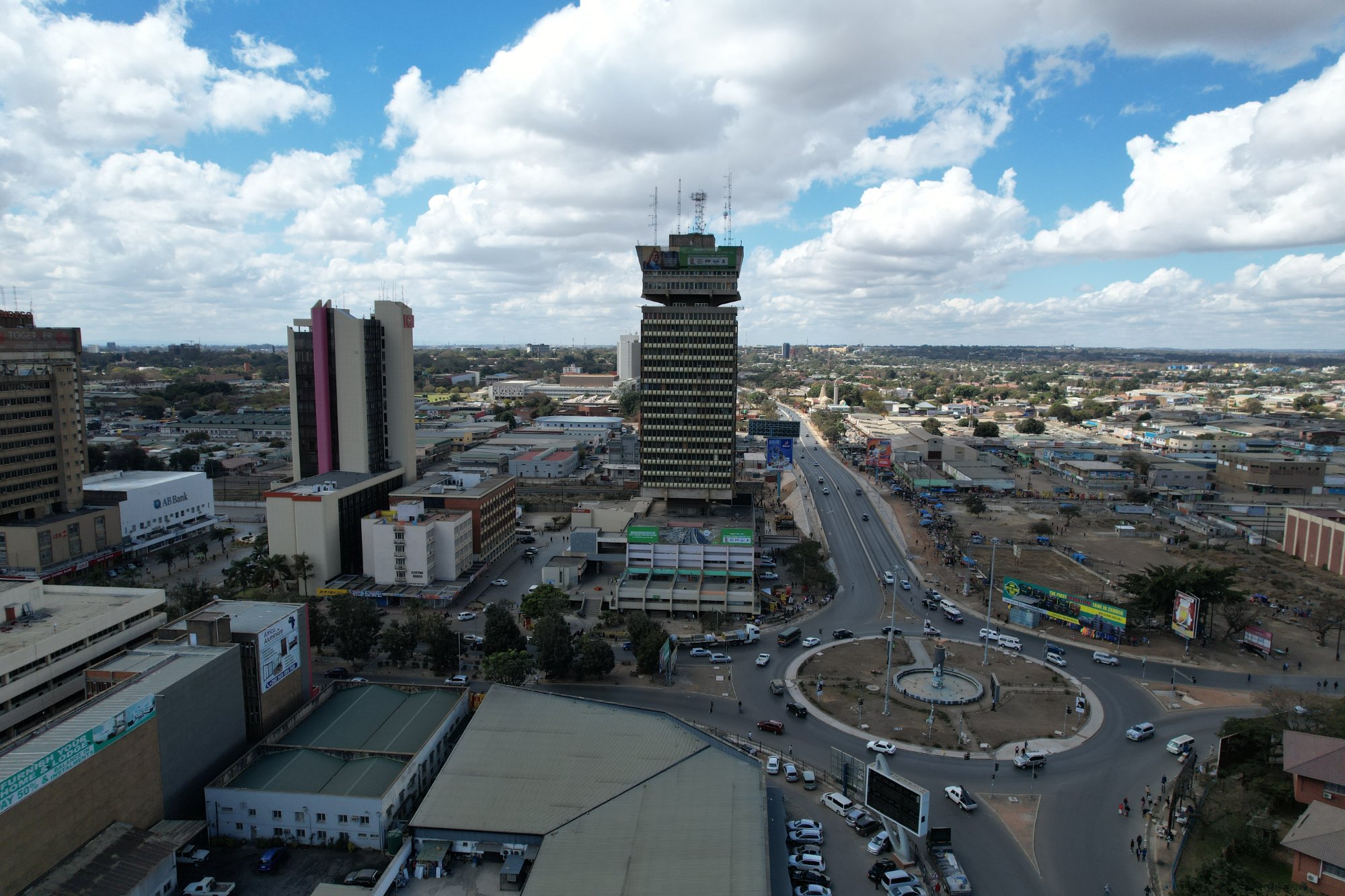
Photo: Lupali, CC BY-SA 4.0, via Wikimedia Commons
Zambia travel planning comes down to two questions: when you are coming, and whether you are flying or driving. Zambia is a straightforward country to travel in once two things are settled: when you are coming, and whether you are flying or driving. Almost every other decision follows from those. This page covers the practical ground common to every trip.
Zambia travel planning: when to go
Zambia has one rainy season, roughly November to April, and one dry season, roughly May to October. The dry season is the main travel season; the wet season is cheaper, greener, better for birds and substantially harder to move around in.
| Period | Conditions | Good for | Trade-offs |
|---|---|---|---|
| May – Aug | Dry; warm days, cold nights | The safari season opens; roads dry; Victoria Falls still strong | Cold early mornings; peak-season camps book out |
| Sep – Oct | Dry and hot | The most reliable game viewing of the year | Heat; the Zambian side of the falls thins out |
| Nov – Dec | First rains | Kasanka’s bats; Liuwa’s wildebeest; green landscapes | Bush camps close; unsurfaced roads deteriorate |
| Jan – Apr | Main rains, the emerald season | Birding, low prices, the falls building to peak | Several parks partly or wholly inaccessible |
Zambia travel planning: getting there
- Kenneth Kaunda International Airport, Lusaka — the principal international gateway and the hub for domestic flights.
- Harry Mwaanga Nkumbula International Airport, Livingstone (LVI) — about five kilometres from Livingstone and fifteen from Victoria Falls. Flying in and out of here without touching Lusaka is a legitimate plan for a falls-focused trip.
- Mfuwe International Airport — the Luangwa Valley gateway, served from Lusaka.
- Simon Mwansa Kapwepwe International Airport, Ndola — the Copperbelt gateway.
- Overland — Kazungula from Botswana, the Victoria Falls Bridge and Chirundu from Zimbabwe, Nakonde from Tanzania, and crossings from Malawi, Mozambique, Namibia and the DRC.
Entry requirements. We do not publish visa rules, categories or fees. They differ by nationality, they have changed repeatedly in this region, and regional visa schemes have been introduced and suspended more than once. Check with the Zambian immigration authority or your nearest mission close to your travel date, and do not rely on any travel site — including this one — for that.
Getting around
- Domestic flights radiate from Lusaka to Livingstone, Mfuwe, Ndola and Solwezi. The network is thin, so connections often mean routing back through Lusaka.
- Charter flights are how most remote camps are reached — Busanga, Liuwa, Bangweulu, North Luangwa and the Lower Zambezi airstrips.
- Intercity buses run the tarred trunk routes and are cheap, slow and well used.
- Hire cars are widely available in Lusaka and Livingstone. See self-drive Zambia for what the roads actually demand.
Money
Two practical points belong in any Zambia travel planning.
The currency is the Zambian kwacha. Cards are accepted at lodges, hotels and larger businesses in the main towns and much less reliably elsewhere; mobile money is widespread and often easier than cash. ATMs are available in all the towns along the trunk roads. Carry cash for markets, taxis, fuel in small towns and park gates.
Health and safety
Two points belong in every plan.
- Malaria is present throughout Zambia, including the Zambezi and Luangwa valleys. Take medical advice on prophylaxis and vaccinations well before you travel.
- Water. Drink bottled or properly treated water outside established lodges.
- Wildlife. Hippo and crocodile are present in every river and lake mentioned on this site. Swim only where an operator has said it is safe.
- Driving at night outside towns is the single largest avoidable risk for most visitors. Plan to arrive before dark.
- Sun and heat. October is genuinely hot in the valleys. Treat it as a planning factor, not a detail.
Connectivity and power
Mobile coverage is good in towns and along the trunk roads and absent in much of the bush — which is generally the point. Local SIM cards are cheap and easy to obtain with identification. Power cuts occur; most lodges run generators or solar, and remote camps often have limited charging hours.
Zambia travel planning: travelling responsibly
Several of Zambia’s most important protected areas — Liuwa Plain, Bangweulu, North Luangwa, Nsumbu — are managed under partnerships between the Department of National Parks and Wildlife and non-profit conservation organisations, with local communities and traditional authorities as partners. Park fees and conservation levies are part of how that works. Ask operators where the money goes; the good ones will tell you in detail.
Ask before photographing people. Buy craft from the makers where you can. And treat the guide’s instructions on foot as safety instructions rather than suggestions.
Where to go next
Sources
Facts and figures on this page are drawn from the following. Where sources disagree we say so in the text.