Region
Kafue National Park
Zambia’s largest park — 22,400 square kilometres of miombo, river and floodplain, with the Busanga Plains at its northern end.
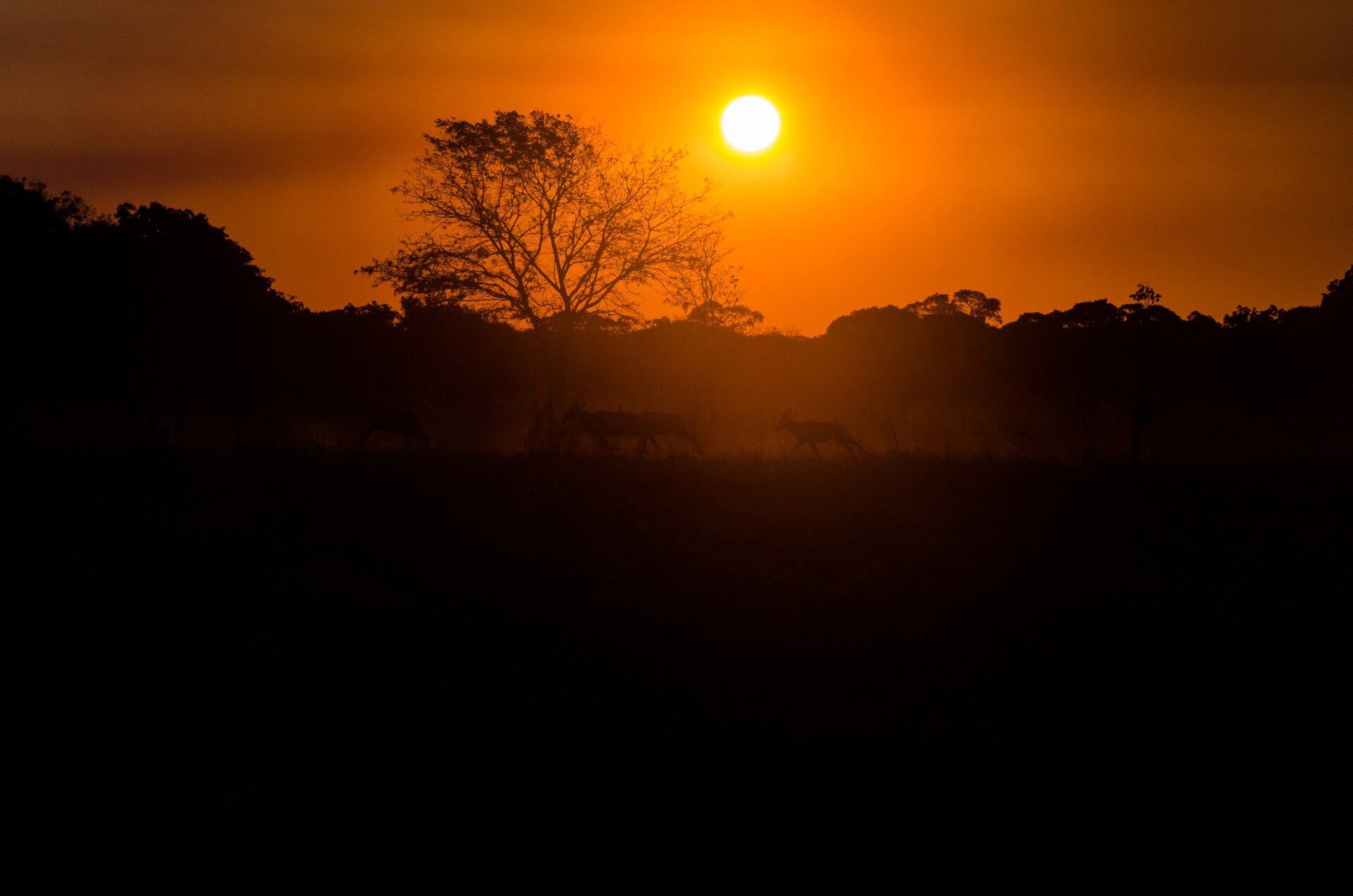
Photo: Todd J, CC BY-SA 2.0, via Wikimedia Commons
Kafue National Park is the largest national park in Zambia. Kafue is the biggest national park in Zambia and one of the largest in Africa, covering about 22,400 square kilometres. It is also the most under-visited park of its size on the continent, which is both its weakness and the entire reason to go.
What Kafue National Park is
Kafue stretches for roughly 200 kilometres north to south, and the M9 Lusaka–Mongu road cuts straight across the middle of it. That road is the practical dividing line: the park is normally discussed as a northern sector and a southern sector, and they are different places.
The habitat range is what makes it unusual. Miombo woodland, riverine forest along the Kafue and its tributaries, dambos, and in the far north a seasonally flooded grassland system on a scale found nowhere else in the country. That variety supports an exceptionally long species list, including antelope you will not readily see elsewhere in Zambia.
The Busanga Plains
The far north-west of Kafue National Park holds its best-known landscape.
The Busanga Plains, in the far north-west of the park, are the reason many people come. When the floodwater retreats, the plains fill with lechwe, puku and buffalo, and they are the most reliable place in Zambia to see the large prides that hunt there.
Access is the catch. Busanga is generally reachable only from about early July to early November. Outside that window the approach is under water and the camps are shut. If Busanga is the point of your trip, the season chooses your dates, not the other way round.
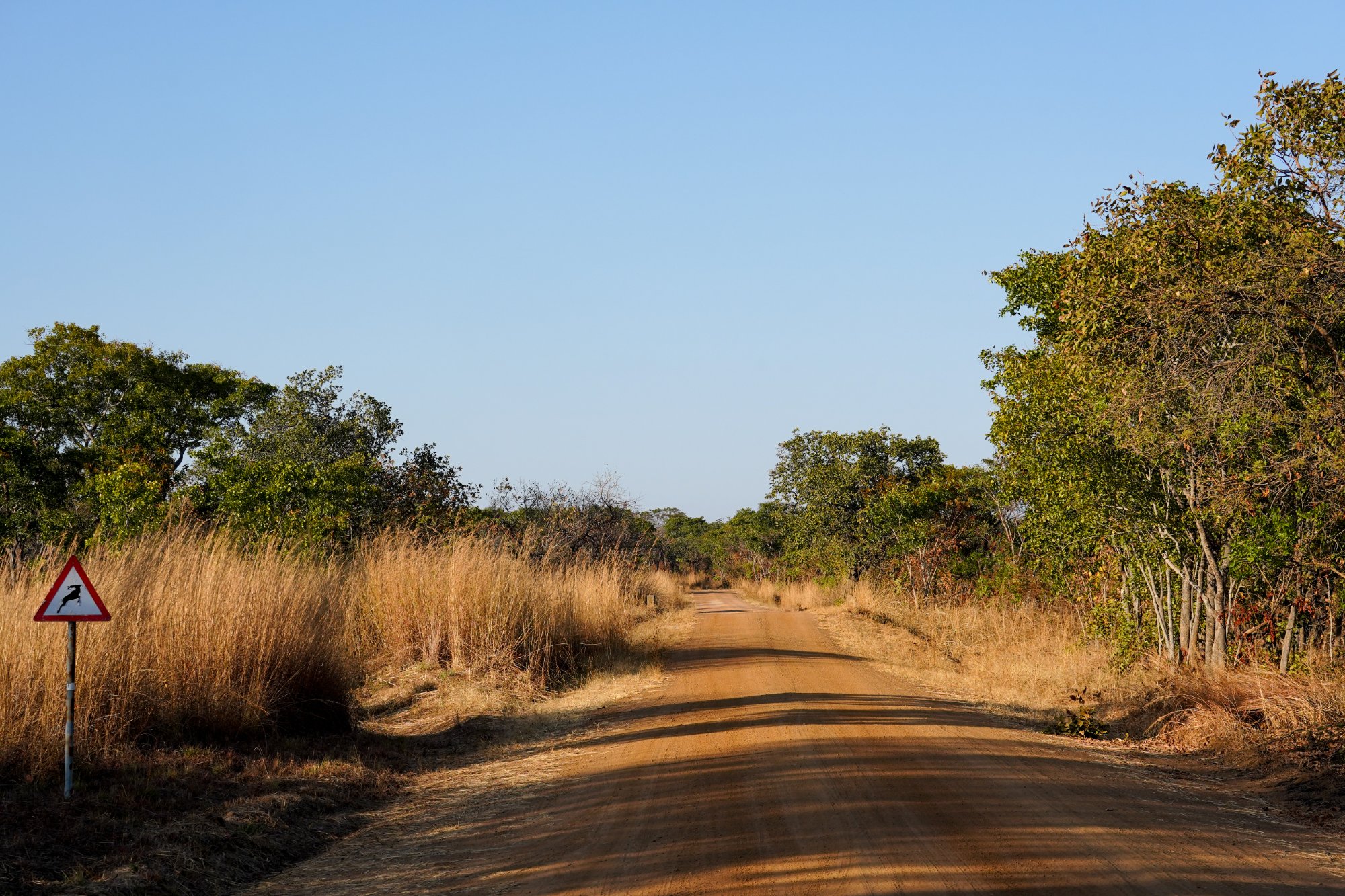
Photo: Timothy A. Gonsalves, CC BY-SA 4.0, via Wikimedia Commons
The southern sector and Itezhi-Tezhi
South of the M9, Kafue National Park is quieter still.
South of the M9 the park runs down to Lake Itezhi-Tezhi, the reservoir formed by the dam on the Kafue River. The southern sector is quieter still than the north, with Nanzhila at its far end, and it is the part of the park most accessible to self-drivers coming up from the Livingstone road.
When to go
Access to Kafue National Park changes completely across the year.
| Roughly | Conditions | Notes |
|---|---|---|
| Jul – Nov | Dry, hardening tracks, water concentrating | The Busanga window. October and early November are hot and are the best game viewing of the year |
| May – Jun | Dry and cool | Good in the south and along the rivers; Busanga usually still inaccessible |
| Dec – Apr | Rains | Much of the park is difficult or impossible to drive; many camps close. Excellent birding where access remains |
Getting there
- By road from Lusaka, the M9 runs west through Mumbwa and enters the park directly. This is the main artery and it is tarred as far as the park.
- Internal tracks are another matter. Within the park, and particularly on the approaches to Busanga, roads are unsurfaced, seasonal and demanding. A high-clearance four-wheel-drive is not optional there.
- By air, camps in the north generally arrange light aircraft transfers, which is how most Busanga visitors arrive.
Kafue is large, sparsely staffed and has long gaps between fuel points. Self-drivers should carry recovery equipment, extra fuel and water, and should not plan to rely on finding help within a reasonable distance.
How long to give Kafue National Park
Kafue punishes short visits. Three to four nights in the north, or three in the south, is the minimum that justifies getting there, and Busanga needs three of its own because the drive or flight in is substantial. A single night in Kafue is a night spent travelling.
Who this region suits
Self-drivers with properly equipped vehicles, and travellers who value space over certainty. You can spend a day in Kafue without seeing another vehicle, which is close to impossible in the Luangwa in high season. It also suits people building a second or third Zambian trip who want habitat and species they have not already seen.
What this region is not
It is not the place for a first safari on a tight schedule. Densities are lower than in the Luangwa, distances between sightings are longer, and the park is large enough that a short visit can be genuinely quiet. Come for the scale and the variety, not for a guaranteed checklist.
Where to go next
- Lusaka & the Kafue Flats — the same river, downstream
- Self-drive Zambia — what Kafue demands of a vehicle
- Western Zambia & Liuwa Plain — further west on the same M9
- All Zambia destinations
- Zambia itineraries — how this region fits into a route
- Where to stay in Zambia
- Travel planning — seasons, flights and getting around
Sources
Facts and figures on this page are drawn from the following. Where sources disagree we say so in the text.