Region
Copperbelt & North-Western Zambia
Mining cities, a chimpanzee sanctuary on ten thousand hectares, and the source of the Zambezi.
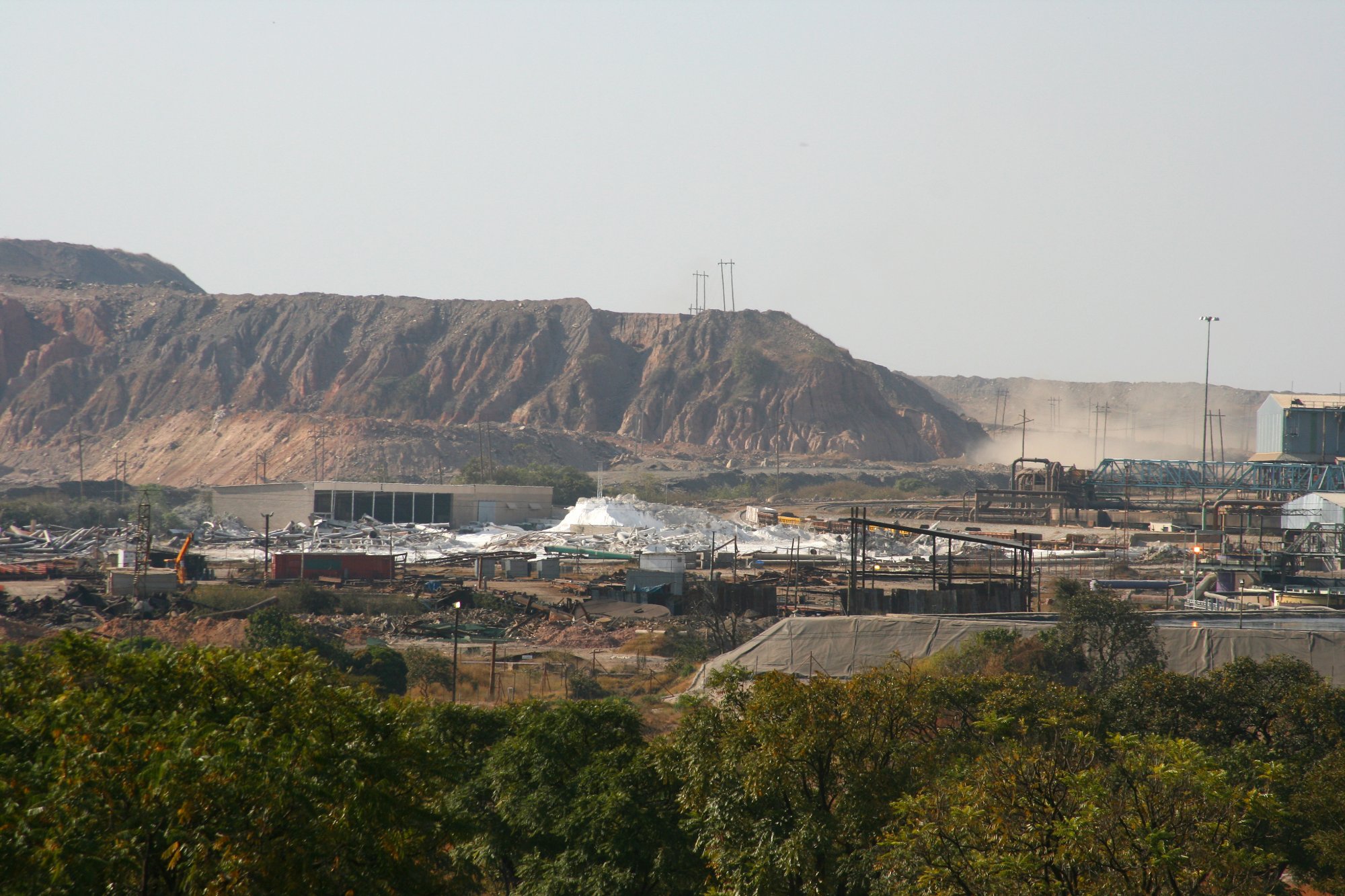
Photo: BlueSalo, CC BY-SA 3.0, via Wikimedia Commons
The Copperbelt is Zambia’s industrial heart and the part of the country least shaped by tourism. West of it, North-Western Province thins out into some of the emptiest bush in Zambia and reaches the point where the Zambezi begins. Together they make the region a traveller comes to for specific things rather than a general itinerary.
The Copperbelt cities
Ndola, Kitwe, Chingola, Luanshya and Mufulira form a chain of mining towns along the Congo border, built around the copper deposits that have dominated Zambia’s economy since before independence. The Nchanga open pit at Chingola is among the largest open-cast copper mines in the world.
These are working cities with hotels, hospitals, shops and Simon Mwansa Kapwepwe International Airport at Ndola. For most visitors they are a transit point or a business destination. If you have an interest in industrial landscape, the scale of the mining here is genuinely striking.
Chimfunshi Wildlife Orphanage
Near Chingola, Chimfunshi cares for around 154 chimpanzees across roughly 10,000 hectares, most of them rescued from the bushmeat and pet trades. It is one of the largest chimpanzee sanctuaries in the world, and the animals live in large forested enclosures rather than cages.
Chimpanzees are not native to Zambia. Chimfunshi is a sanctuary for animals confiscated elsewhere in Africa, not a wildlife-viewing destination, and the ethical sanctuaries do not offer contact with the animals. Visit on that understanding.
North-Western Province
West of the Copperbelt the population thins and the roads lengthen.
West of the Copperbelt the population thins and the roads lengthen. Solwezi is the provincial centre and a mining town in its own right. Beyond it, Mwinilunga sits close to the point where Zambia, Angola and the Democratic Republic of the Congo meet.
The Source of the Zambezi — the spring in the Mwinilunga highlands where Africa’s fourth-longest river begins as a stream you can step across — was added to UNESCO’s Tentative List on 5 March 2026. It is a modest place and a genuinely moving one if you have followed the same river at Victoria Falls.
West Lunga National Park
West Lunga is generally described as the least-visited national park in Zambia. It protects riverine forest and miombo between the West Lunga and Kabompo rivers, has minimal infrastructure, and sees a handful of visitors a year. It is for the genuinely self-sufficient.
When to go
The Copperbelt is accessible year-round; the province beyond it is not.
The Copperbelt cities are accessible year-round on tarred roads. North-Western Province follows the general pattern: the dry months from about May to October are the practical window, and the rains from November to April make unsurfaced roads in Mwinilunga and around West Lunga difficult to impossible. The source area is at its greenest towards the end of the rains.
Getting there
- By road, the T3 runs north from Lusaka through Kapiri Mposhi to Ndola and on through the Copperbelt. It is tarred and busy.
- To Solwezi and Mwinilunga, the road continues west; surface quality declines with distance and the final approaches are unsurfaced.
- By air, Ndola is the region’s international gateway and connects to Lusaka.
How long to give the Copperbelt
One or two nights covers the Copperbelt for most visitors, with Chimfunshi as a full day out from Chingola or Kitwe. North-Western Province is a different proposition: Mwinilunga and the Zambezi headwaters are a long way past Solwezi, and reaching them properly needs three or four days from the Copperbelt.
Who the Copperbelt suits
People who are already here for work, travellers with an interest in industrial landscape and in how Zambia’s economy actually functions, and the small number who want to stand at the beginning of the Zambezi having already seen it at Victoria Falls. Chimfunshi draws visitors in its own right.
What this region is not
It is not a safari region. West Lunga is barely developed for visitors, and the Copperbelt parks are minor. Nobody should build a Zambian wildlife trip around this region, and anyone who tells you otherwise is selling a route rather than advising on one.
Where to go next
- Northern Lakes & Waterfalls — north-east from the Copperbelt
- Bangweulu & the Central Wetlands
- Victoria Falls — the far end of the same river
- All Zambia destinations
- Zambia itineraries — how this region fits into a route
- Where to stay in Zambia
- Travel planning — seasons, flights and getting around
Sources
Facts and figures on this page are drawn from the following. Where sources disagree we say so in the text.