Region
Northern Lakes & Waterfalls
Lake Tanganyika, Kalambo Falls, and the waterfall circuit of Zambia’s far north.
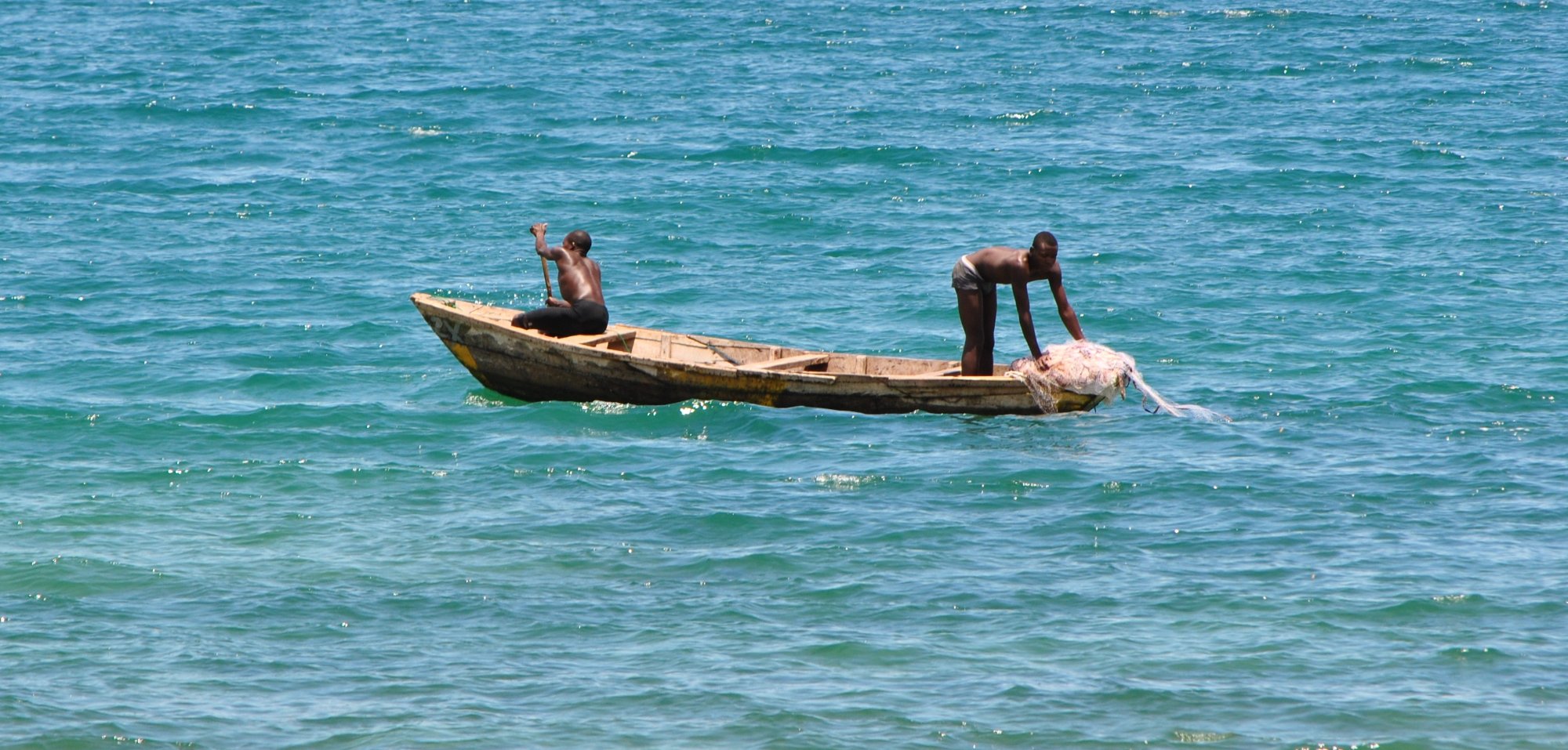
Photo: Thatlowdownwoman, CC BY-SA 4.0, via Wikimedia Commons
Lake Tanganyika reaches its southern tip in Zambia, and this region is built around it. Zambia’s northern tip reaches the southern end of Lake Tanganyika, and the country’s highest concentration of waterfalls lies on the rivers between there and the Congo border. This is the least-travelled quarter of Zambia and the one with the least in common with the safari circuit.
Lake Tanganyika
Tanganyika is the second-deepest lake in the world, at about 1,470 metres, and the second-oldest. Zambia holds only its southern tip, but that tip includes Mpulungu, the country’s only port, and a shoreline of rocky bays and clear water that is entirely unlike anywhere else in Zambia.
The lake is famous among aquarists as the origin of a great many cichlid species found nowhere else, and snorkelling and diving here are genuinely rewarding for that reason. Mbala, the town above the lake on the escarpment, was formerly named Abercorn.
Nsumbu National Park
Nsumbu is the only Zambian national park on Lake Tanganyika.
Nsumbu runs along the lakeshore west of Mpulungu, combining about a hundred kilometres of shoreline with miombo woodland and escarpment behind it. It is managed by the Frankfurt Zoological Society in partnership with the Department of National Parks and Wildlife, and it has been the subject of a long-running restoration effort after heavy historical poaching.
Wildlife numbers are recovering rather than abundant. Come for the combination — a national park on a great lake — rather than for game densities that would compete with the Luangwa.
Kalambo Falls
The Kalambo River drops 235 metres in a single uninterrupted fall on the Zambia–Tanzania border, making it one of the highest waterfalls in Africa. It is a fraction of Victoria Falls by volume and several times its height.
The site is also of major archaeological importance. Wooden structures excavated there were dated in 2023 to roughly 476,000 years ago — among the oldest known worked wood anywhere, and evidence of construction long predating our own species.
The waterfall circuit
Northern Zambia has more accessible waterfalls than the rest of the country combined. Besides Kalambo, the ones most often linked into a circuit include Lumangwe and Kabwelume on the Kalungwishi River, Ntumbachushi near Kawambwa, Chishimba near Kasama, and Kundalila on the Muchinga escarpment further south.
They are best after the rains, from about March to June, when the rivers are full and the roads have begun to dry. Late in the dry season several of them are much reduced.
When to go
Lake Tanganyika is good year-round; the waterfalls are not.
March to June is the sweet spot for the waterfalls. The lake is good year-round, though the rains bring rough water and difficult roads. Nsumbu follows the general Zambian dry-season pattern, roughly May to October.
Getting there
- By road, the Great North Road (T2) runs from Lusaka via Kapiri Mposhi, Serenje and Mpika to Kasama, and on to Mbala and Mpulungu. It is a very long drive — two days is realistic — and the side roads to individual waterfalls are unsurfaced.
- By air, scheduled and charter services reach Kasama and Mbala.
- By lake, a passenger ferry has historically connected Mpulungu with ports further up Lake Tanganyika. Schedules are irregular; confirm locally.
This region rewards time. It is a poor choice for a short trip and a genuinely rewarding one for a long, slow overland route. Fuel and vehicle services are sparse away from the main towns.
How long to give Lake Tanganyika and the north
A week is the minimum that makes sense, and ten days is more comfortable. The driving distances are the reason: Lusaka to Mpulungu is a two-day drive each way on the Great North Road, and the waterfalls are strung along side roads that add hours rather than minutes.
Who Lake Tanganyika suits
Overlanders, waterfall hunters, and divers and aquarists drawn by Lake Tanganyika’s endemic cichlids. It also suits travellers with an interest in deep prehistory, given what has been excavated at Kalambo. Anyone who enjoys a long road more than a short flight will get more out of this region than out of anywhere else in Zambia.
What this region is not
It is not a safari region in the ordinary sense. Nsumbu is recovering rather than abundant, and visitors who come expecting Luangwa densities on a lakeshore will be disappointed. It is also not a short trip, and attempting it as one means spending almost all of it in a vehicle.
Where to go next
- Bangweulu & the Central Wetlands — on the road up from Lusaka
- Copperbelt & North-Western Zambia
- Self-drive Zambia — the Great North Road
- All Zambia destinations
- Zambia itineraries — how this region fits into a route
- Where to stay in Zambia
- Travel planning — seasons, flights and getting around
Sources
Facts and figures on this page are drawn from the following. Where sources disagree we say so in the text.